AI Agents Exacerbate Existing Data Security Weaknesses
Forrester's AEGIS Framework outlines eight controls to protect data as autonomous agents act on behalf of users.
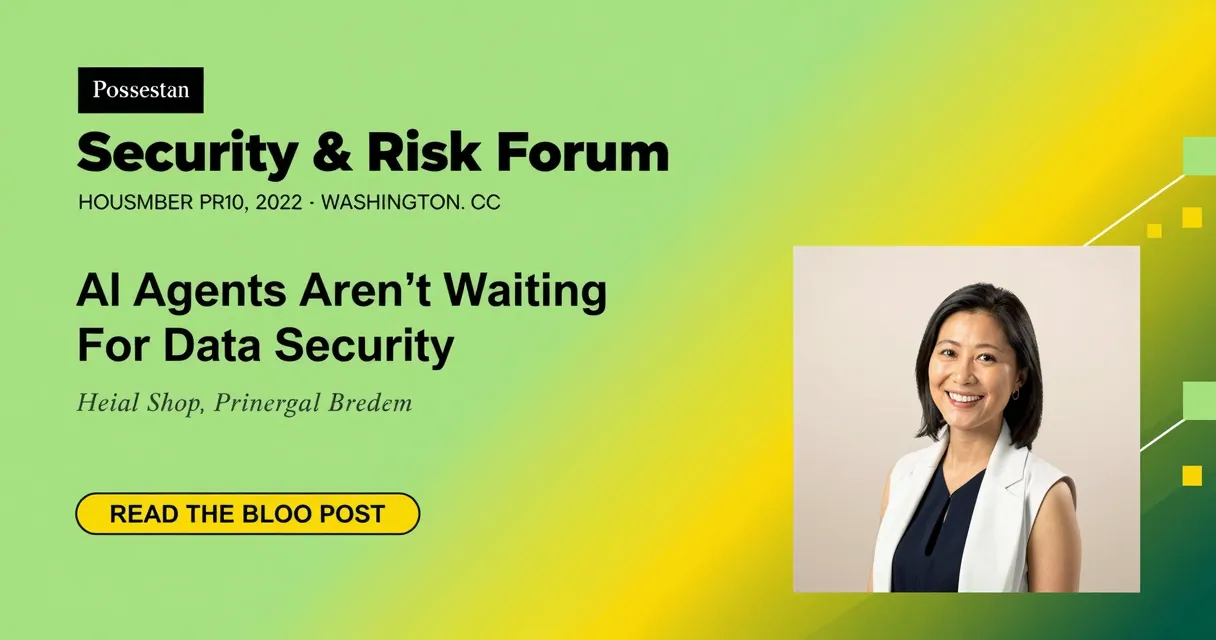
AI agents now retrieve information, interpret it, create new content, interact with systems, and act on a user’s behalf, fundamentally changing the data security conversation. While leaders have long struggled to understand where sensitive data lives and how to prevent inappropriate use, agentic AI adds speed, scale, and new dependencies to an already difficult task.
Magnifying Existing Weaknesses
Agentic AI exposes and amplifies data weaknesses organizations already possess, turning minor issues into major risks. Unclear classification, uncertain ownership, inconsistent permissions, incomplete lineage, and questionable data quality become far more consequential when an agent can reach across repositories with increasing autonomy to act.
Conversations about inspecting prompts or blocking sensitive responses are necessary but insufficient on their own. The core challenge is that security does not own every decision determining whether data is accurate, appropriate, properly retained, or suitable for an AI use case. Data governance and management practices, privacy stakeholders, data leadership, and business requirements all play a part in establishing AI-ready data. Consequently, AI adoption will not pause while organizations attempt to resolve years of data management and governance debt.
A Framework For Protection
Forrester’s AEGIS Framework for securing agentic AI outlines eight controls within its Data Security And Privacy domain as necessary for protecting data. These controls are not all technical; they include a mix of process and practices requiring alignment with data, privacy, and AI engineering stakeholders to achieve across agent and data control design.
Security teams typically focus first on AEGIS-DATA-02 (data classification) within this domain, recognizing the value of consistent classification and better inventories before moving forward. The key is to move forward from here without being haunted by past DLP deployments. Today, data security—tightly coupled with identity context for access and authorization!—requires the ability to enforce policies for AI agent access and interactions with data, and subsequent downstream actions.
Security leaders need a practical way to distinguish between risks they can address directly where dependencies make autonomous behavior too risky, and risks requiring broader alignment with data and privacy functions where each function will have varying levels of maturity.