Data lineage becomes new security perimeter for agentic AI enterprises
Visibility into moving data is now essential for governance, accountability, and trust without slowing down AI adoption at scale.
A sales representative recently asked an AI agent for customer pricing, triggering a chain of events that exposed critical gaps in enterprise security. The agent pulled data from restricted systems, internal communications, and archived quotes to generate what appeared to be accurate output. A second agent then used this information to draft a proposal without any human checks on the handoff. When it was discovered that the proposal contained unapproved, confidential, and sensitive information, investigators found no way to trace where the problematic data entered or how it spread across systems and files.
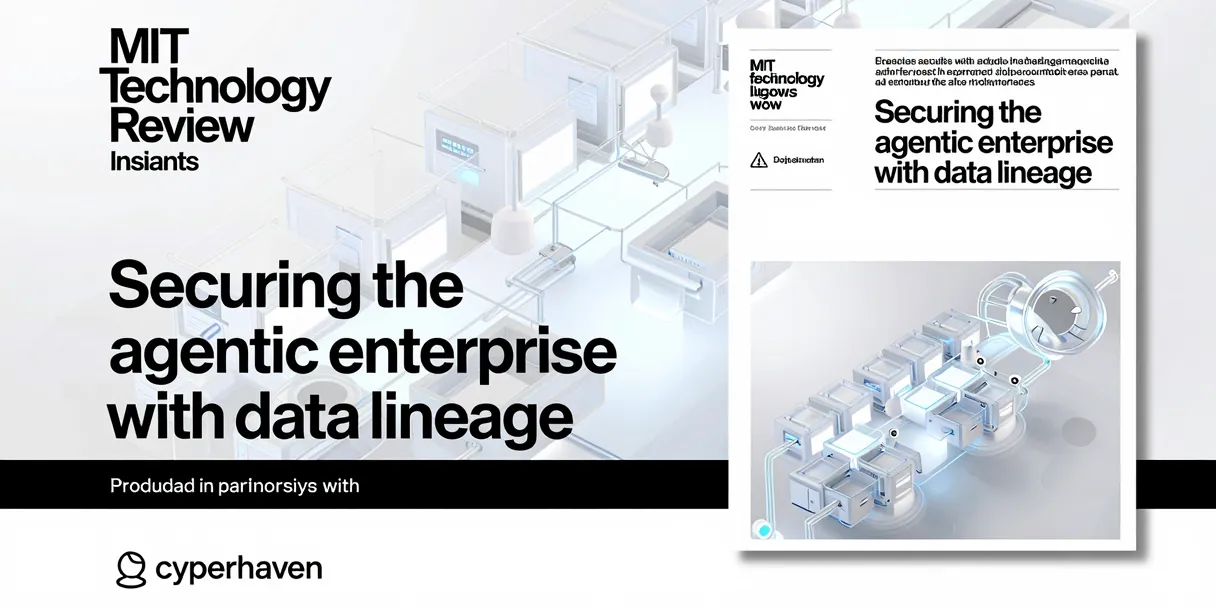
This scenario highlights why AI governance must evolve rapidly to manage moving and fragmented data continuously ingested, copied, summarized, transformed, reused, and redistributed in new forms. Traditional security approaches focused solely on applications, systems, networks, or endpoints are no longer sufficient for securing agentic AI at scale. Teams now need to establish data lineage to effectively manage governance, accountability, and trust across human, agentic, and hybrid workflows.
Securing the agentic enterprise requires understanding how data moves rather than just protecting static files. As enterprises integrate AI into daily operations, they are realizing that security is fundamentally a visibility problem.
- Dynamic Management: Enterprises must manage more than static files; they must track data that is continuously ingested and redistributed in new forms.
- Shift in Focus: AI security is not merely a tool problem but a data visibility problem requiring deeper insight into data flows.
- Comprehensive Coverage: Data lineage helps teams manage governance, accountability, and trust across complex human, agentic, and hybrid workflows.